
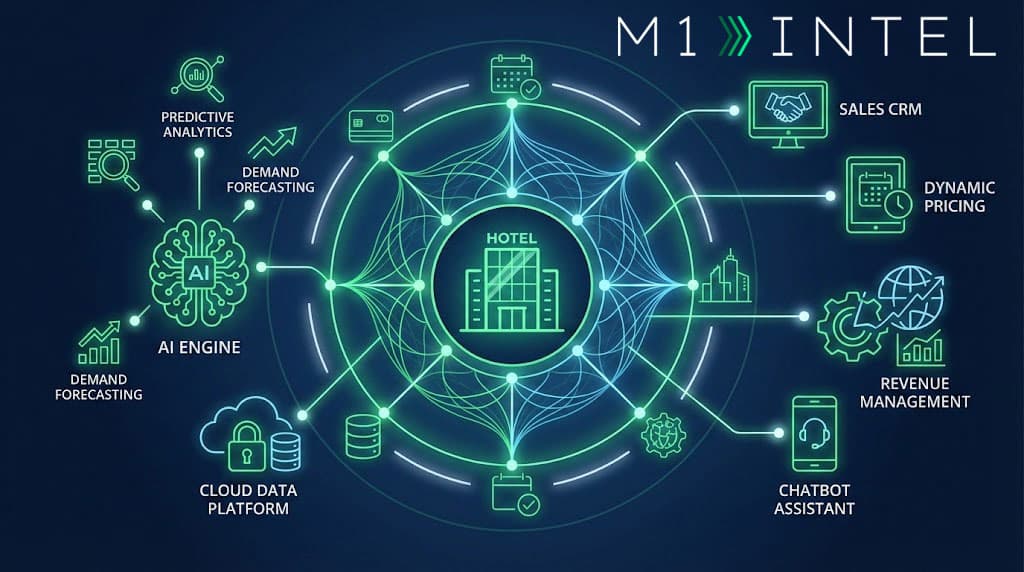
Matrix is the first AI-powered hotel CRM built specifically for management companies. While legacy systems like Delphi and STS Cloud were designed for single properties, Matrix uses AI to centralize leads, automate data entry, and give portfolio-wide visibility across all your hotels.
If you’ve been following the latest AI developments in hotel sales, you’ve probably Hotel CRM AI integration is reshaping the way sales teams operate. noticed a new acronym transforming the industry: “MCP,” also known as the Model Context Protocol.
The Model Context Protocol might sound like technical jargon, but it represents a fundamental shift in how AI applications connect with real-world tools and agents. For hotel sales teams specifically, MCP integration opens possibilities that weren’t feasible even six months ago.
At M1 Intel, we’re building Matrix with MCP integration on our roadmap because we believe the future of hotel sales management isn’t just about better dashboards or faster workflows. It’s about systems that can actually understand your business context and take action on your behalf.
Here’s what that means, why it matters for hotels, and how we’re approaching it.
What is MCP (And Why Should Hotel Sales Teams Care)?
MCP (Model Context Protocol) is an open standard that’s exploding in popularity among early AI adopters. In simple terms, MCP is a protocol that allows AI applications to communicate with various services and tools.
The key innovation is the standardization. With MCP, any AI that speaks the protocol can instantly tap into a growing ecosystem of servers. This dramatically amplifies what systems like Claude, ChatGPT, and Gemini can accomplish without custom coding.
What makes this revolutionary is the standardization. With MCP, any AI that speaks the protocol can instantly tap into an (exponentially growing) ecosystem of servers. This dramatically amplifies what systems like Claude, ChatGPT, and Gemini can accomplish without custom coding for each integration.
It’s kind of like what HTTP did for the web or what USB did for hardware connectivity.
Before MCP, having your CRM data accessible to three different AI systems required five separate integrations. Each developer would need to know how to use the API (Application Programming Interface) of the CRM and then write specific code for each possible use case, calling the API as needed.
With MCP, you implement the standard model context protocol once, and you’re compatible with every AI app, agent, or system that speaks MCP.
 The real magic happens when you combine tools from multiple MCP servers to accomplish higher-level goals. For hotel sales operations, this creates possibilities that go far beyond what traditional integrations can deliver.
Why This Matters for Hotel Sales Operations
Most hotel CRM systems were designed in an era when “integration” meant exporting a CSV file or building a one-way data sync with your PMS. They weren’t built for a world where AI agents can understand natural language requests and execute complex workflows across multiple systems.
Here’s the uncomfortable truth: the gap between what AI can theoretically do and what it can actually access in your hotel’s sales operation is massive. You might be using Claude or ChatGPT to draft emails or analyze data, but those systems have no idea what’s in your sales pipeline, which opportunities need follow-up, or which accounts are about to renew.
MCP bridges that gap.
When your hotel CRM supports MCP, AI applications can:
- Query your actual sales data (not just generic advice)
- Understand the context of your specific deals and accounts
- Take actions based on that understanding
- Combine hotel sales data with information from other systems
This isn’t science fiction. It’s happening right now in industries that have embraced MCP early.
Real Scenarios: What MCP Could Enable for Hotel Sales Teams
Let’s move from theory to practice. Here are three scenarios that become possible when Matrix implements MCP support:
1. Intelligent Pipeline Analysis and Outreach
Traditional approach: Your sales director manually reviews the pipeline every week, identifies stale opportunities, and reminds salespeople to follow up.
With MCP-enabled Matrix:
You give your AI assistant a simple prompt: “Draft personalized follow-ups to all contacts added in the last 30 days, analyze the last conversation notes for each, and suggest next steps based on their history.”
The AI:
- Pulls contact data from Matrix via MCP
- Reviews activity history and conversation notes
- Generates personalized email drafts for each contact
- Suggests specific next steps based on deal stage and timing
- Drafts the emails in your voice, referencing specific details from previous conversations
Your sales team reviews and sends, but the heavy lifting—reviewing dozens of contacts, remembering conversation context, crafting personalized outreach—happens automatically.
Time saved: Hours per week that were spent manually reviewing accounts and crafting follow-ups.
2. Pattern Recognition Across Your Portfolio
Traditional approach: You suspect some deals are getting stuck, but manually analyzing patterns across hundreds of opportunities is time-consuming and subjective.
With MCP-enabled Matrix:
You ask: “Analyze our sales pipeline, identify deals that haven’t moved in 30 days, and suggest next steps for each based on the last conversation notes.”
The AI:
- Queries Matrix for opportunities with no recent activity
- Analyzes stage progression patterns
- Reviews last touchpoint for each stale opportunity
- Identifies common patterns (waiting on proposals, pending rate approvals, radio silence after site visit)
- Suggests specific recovery actions for each category
You get actionable intelligence that would take a human analyst hours to compile—delivered in seconds.
3. Cross-System Intelligence for Smarter Decisions
Traditional approach: Sales data lives in your CRM. Pace data lives in your RMS. Historical performance lives in spreadsheets. Connecting these insights requires manual work.
With MCP-enabled Matrix (combined with other MCP servers):
You ask: “Compare our current Q1 group sales pipeline to this time last year. Flag any properties that are significantly behind pace and suggest specific accounts to target based on historical booking patterns.”
The AI:
- Pulls current pipeline data from Matrix via MCP
- Accesses historical data (potentially from other MCP-enabled systems)
- Identifies variance by property and segment
- Surfaces accounts that typically book this time of year but haven’t been contacted yet
- Generates a prioritized target list with context for each account
This type of analysis requires combining data from multiple sources with historical pattern recognition—exactly what AI excels at, but only if it has access to the right data through protocols like MCP.
Why We’re Building MCP Support Into Matrix
When we started building Matrix, we made a conscious choice: build on modern architecture, not legacy systems retrofitted with new interfaces.
That decision is paying dividends now. Because Matrix was built from the ground up with APIs and data accessibility in mind, adding MCP support is a natural extension of our existing infrastructure—not a fundamental rebuild.
Here’s why MCP integration aligns with our core philosophy:
Data Ownership You Can Actually Use
We’ve always believed your sales data belongs to you. MCP takes that principle further—not just ownership, but usability. Your data shouldn’t be locked in a system that only works with specific tools or requires expensive consulting to access.
With MCP, your Matrix data becomes accessible to any AI application or agent that supports the protocol. You’re not locked into our interpretation of what’s useful. You can use the AI tools that work best for your workflow.
Future-Proofing Your Investment
The AI landscape is evolving rapidly. New capabilities emerge monthly. Hotels that bet on closed systems will need to wait for their vendor to build each new integration—if they build it at all.
Hotels using MCP-compatible systems like Matrix will be able to leverage new AI capabilities as they emerge, without waiting for custom integrations or paying for professional services.
Solving Real Problems, Not Chasing Trends
We’re not adding MCP support because it’s trendy. We’re doing it because hotel sales teams face genuine challenges that AI can help solve:
- Sales managers spending hours building reports that could be generated automatically
- Opportunities going stale because follow-up reminders are manual and easy to miss
- Cross-property insights that require combining data from multiple systems
- Personalized outreach at scale that’s currently impossible without massive time investment
MCP doesn’t solve these problems by itself. But it’s the infrastructure that makes AI-powered solutions actually viable.
The Competitive Reality: First Movers Will Have an Advantage
Here’s something most hotel CRM vendors won’t tell you: legacy platforms weren’t designed for this. Systems built on outdated architecture, with data locked in proprietary formats, will struggle to implement MCP effectively—if they attempt it at all.
By the time those systems catch up (if they do), hotels using modern, MCP-compatible platforms will have months or years of experience leveraging AI for competitive advantage.
Early adopters will be:
- Identifying and recovering stale opportunities faster
- Generating more personalized outreach with less manual effort
- Making data-driven decisions with insights that previously required dedicated analysts
- Freeing their sales teams to focus on relationship-building instead of administrative work
The gap between hotels using AI-enabled sales systems and those using traditional CRMs will widen quickly.
What MCP Integration Looks Like in Practice
Let’s be practical about implementation. MCP support doesn’t mean your sales team suddenly needs to become AI experts.
The experience will feel natural:
For day-to-day users: Your workflow in Matrix doesn’t change. You’re still managing leads, tracking opportunities, and closing deals. But your sales director or consultant might start using AI tools that pull Matrix data to generate insights, draft communications, or surface priorities.
For sales leadership and consultants: You’ll have the option to use AI assistants (like Claude Desktop with MCP support) to query your Matrix data using natural language. Instead of building custom reports or manually reviewing pipeline health, you can simply ask questions and get answers based on your actual data.
For tech-savvy teams: If you want to build custom workflows or automation using AI agents, MCP provides the standardized access to make that possible without extensive development work.
The key is optionality. MCP support makes new capabilities available without forcing anyone to change how they work today.
The Technical Foundation Matters
One reason we can confidently add MCP support to Matrix’s roadmap is that we built the foundation correctly from day one.
Matrix was designed with:
- Modern API architecture – not bolted on as an afterthought
- Clean data models – structured for accessibility and extensibility
- Secure authentication – role-based access that extends to API and MCP interactions
- Real-time data – not batch processing that makes AI insights stale
These aren’t marketing buzzwords. They’re architectural decisions that make the difference between “we’ll explore that someday” and “we’re actively building this.”
Hotels evaluating CRM systems should ask direct questions about technical foundation:
- Was this built in the last five years or is it a legacy system with a new interface?
- Does it have a modern API, or just CSV exports?
- Can it support real-time data access, or is everything batch-processed?
- Is the vendor even thinking about AI integration beyond basic autocomplete features?
The answers will tell you whether a platform is positioned for the AI era or stuck in the past.
Looking Ahead: The Future of AI in Hotel Sales
We believe AI will fundamentally change how hotel sales teams operate—but not by replacing salespeople.
The best outcomes will come from AI augmentation: systems that handle the tedious, time-consuming analysis and administrative work, freeing sales professionals to focus on what humans do best—building relationships, negotiating complex deals, and delivering exceptional service.
MCP is one piece of that vision. It’s the infrastructure layer that makes AI agents genuinely useful for hotel operations, not just impressive in demos.
As we develop MCP support for Matrix, we’re focused on practical applications that solve real problems:
- Sales managers getting instant pipeline analysis instead of spending Friday afternoons building reports
- Consultants managing multiple properties with AI-powered insights that would otherwise require dedicated analysts
- Sales teams receiving intelligent reminders and suggested actions based on actual deal context, not generic calendar alerts
This isn’t about adding “AI features” for the sake of a press release. It’s about building the foundation for hotel sales systems that are genuinely more intelligent, more helpful, and more aligned with how modern sales teams want to work.
What This Means for Matrix Users and Prospects
If you’re already using Matrix, here’s what MCP integration means for you:
Your data remains yours. MCP support expands how you can use that data, but doesn’t change ownership or security. You’ll have more options, not fewer.
No forced changes. MCP capabilities will be opt-in. Teams that want to leverage AI assistance can do so. Teams that prefer traditional workflows can continue as they are.
Future-proofed investment. As AI capabilities evolve, your CRM will be ready to take advantage of new tools and techniques without requiring a platform migration.
If you’re evaluating hotel CRM systems, MCP support (or roadmap plans for it) should be a key evaluation criterion. It’s a strong signal about:
- Technical architecture quality (MCP is easier to implement on modern systems)
- Vendor forward-thinking (are they planning for the AI era or just maintaining legacy systems?)
- Long-term viability (will this platform evolve with the industry or require replacement in 3-5 years?)
The Companies That Move Quickly Will Gain Advantages
Early adopters of MCP across various industries are already seeing results. The companies that move quickly on AI capabilities like MCP are creating genuine business value, not just viral demos or theoretical possibilities.
For hotels, that advantage shows up in:
- Faster sales cycles (because opportunities don’t languish without follow-up)
- Higher conversion rates (because outreach is more personalized and timely)
- Better resource allocation (because data-driven insights highlight where to focus effort)
- Improved consultant efficiency (because managing multiple properties requires less manual analysis)
These aren’t marginal gains. They’re the difference between a sales operation that’s constantly playing catch-up and one that’s proactively pursuing the right opportunities at the right time.
We’re Building This Together
As we develop MCP integration for Matrix, we’re doing what we always do: staying close to hotel operators who actually use these systems every day.
We’re not building features based on what sounds impressive in a pitch deck. We’re solving real problems that our own sales teams encounter, that our customers tell us about, and that consultants managing multiple properties struggle with.
If you’re a Matrix user interested in early access to MCP capabilities as they develop, or if you have specific use cases you’d like to see prioritized, we want to hear from you.
This is the advantage of working with a platform built by hotel operators who are still actively running properties. We’re not guessing what might be useful. We’re building what we know will make a difference.
The Future is Connected, Intelligent, and Open
The hotel industry has historically been slow to adopt new technology. There are good reasons for that—hospitality operations are complex, margins are tight, and the cost of downtime is high.
But AI represents a different kind of opportunity. It’s not asking hotels to completely replace working systems or retrain entire teams on new platforms. It’s offering to make existing systems dramatically more useful by adding intelligence and automation where it matters most.
MCP is the infrastructure that makes that possible. It’s an open standard, which means hotels aren’t betting on a single vendor’s vision of what AI should do. You’re gaining access to an ecosystem of capabilities that will continue expanding as AI technology evolves.
At M1 Intel, we’re committed to building Matrix for this future—not because it’s trendy, but because it’s the right technical foundation for hotel sales teams that want to work smarter, move faster, and deliver better results.
The AI era is here. The question is whether your hotel sales system is ready for it.
[heading]How Matrix Compares to Other Hotel Sales Software[/heading]JTNDdGFibGUlMjBzdHlsZSUzRCUyMndpZHRoJTNBMTAwJTI1JTNCJTIwYm9yZGVyLWNvbGxhcHNlJTNBJTIwY29sbGFwc2UlM0IlMjBtYXJnaW4lM0ElMjAyZW0lMjAwJTNCJTIyJTNFJTBBJTIwJTIwJTNDdGhlYWQlM0UlMEElMjAlMjAlMjAlMjAlM0N0ciUyMHN0eWxlJTNEJTIyYmFja2dyb3VuZC1jb2xvciUzQSUyMCUyMzAxMjMxZCUzQiUyMGNvbG9yJTNBJTIwd2hpdGUlM0IlMjIlM0UlMEElMjAlMjAlMjAlMjAlMjAlMjAlM0N0aCUyMHN0eWxlJTNEJTIycGFkZGluZyUzQSUyMDEycHglM0IlMjB0ZXh0LWFsaWduJTNBJTIwY2VudGVyJTNCJTIwYm9yZGVyJTNBJTIwMXB4JTIwc29saWQlMjAlMjNkZGQlM0IlMjBjb2xvciUzQSUyMHdoaXRlJTNCJTIyJTNFRmVhdHVyZSUzQyUyRnRoJTNFJTBBJTIwJTIwJTIwJTIwJTIwJTIwJTNDdGglMjBzdHlsZSUzRCUyMnBhZGRpbmclM0ElMjAxMnB4JTNCJTIwdGV4dC1hbGlnbiUzQSUyMGNlbnRlciUzQiUyMGJvcmRlciUzQSUyMDFweCUyMHNvbGlkJTIwJTIzZGRkJTNCJTIwY29sb3IlM0ElMjB3aGl0ZSUzQiUyMiUzRU1hdHJpeCUzQyUyRnRoJTNFJTBBJTIwJTIwJTIwJTIwJTIwJTIwJTNDdGglMjBzdHlsZSUzRCUyMnBhZGRpbmclM0ElMjAxMnB4JTNCJTIwdGV4dC1hbGlnbiUzQSUyMGNlbnRlciUzQiUyMGJvcmRlciUzQSUyMDFweCUyMHNvbGlkJTIwJTIzZGRkJTNCJTIwY29sb3IlM0ElMjB3aGl0ZSUzQiUyMiUzRUV2ZW50JTIwVGVtcGxlJTNDJTJGdGglM0UlMEElMjAlMjAlMjAlMjAlMjAlMjAlM0N0aCUyMHN0eWxlJTNEJTIycGFkZGluZyUzQSUyMDEycHglM0IlMjB0ZXh0LWFsaWduJTNBJTIwY2VudGVyJTNCJTIwYm9yZGVyJTNBJTIwMXB4JTIwc29saWQlMjAlMjNkZGQlM0IlMjBjb2xvciUzQSUyMHdoaXRlJTNCJTIyJTNFVHJpcGxlc2VhdCUzQyUyRnRoJTNFJTBBJTIwJTIwJTIwJTIwJTIwJTIwJTNDdGglMjBzdHlsZSUzRCUyMnBhZGRpbmclM0ElMjAxMnB4JTNCJTIwdGV4dC1hbGlnbiUzQSUyMGNlbnRlciUzQiUyMGJvcmRlciUzQSUyMDFweCUyMHNvbGlkJTIwJTIzZGRkJTNCJTIwY29sb3IlM0ElMjB3aGl0ZSUzQiUyMiUzRVRoeW5rJTNDJTJGdGglM0UlMEElMjAlMjAlMjAlMjAlM0MlMkZ0ciUzRSUwQSUyMCUyMCUzQyUyRnRoZWFkJTNFJTBBJTIwJTIwJTNDdGJvZHklM0UlMEElMjAlMjAlMjAlMjAlM0N0ciUzRSUwQSUyMCUyMCUyMCUyMCUyMCUyMCUzQ3RkJTIwc3R5bGUlM0QlMjJwYWRkaW5nJTNBJTIwMTJweCUzQiUyMGJvcmRlciUzQSUyMDFweCUyMHNvbGlkJTIwJTIzZGRkJTNCJTIyJTNFQnVpbHQlMjBmb3IlMjBtdWx0aS1wcm9wZXJ0eSUyMHBvcnRmb2xpb3MlM0MlMkZ0ZCUzRSUwQSUyMCUyMCUyMCUyMCUyMCUyMCUzQ3RkJTIwc3R5bGUlM0QlMjJwYWRkaW5nJTNBJTIwMTJweCUzQiUyMHRleHQtYWxpZ24lM0ElMjBjZW50ZXIlM0IlMjBib3JkZXIlM0ElMjAxcHglMjBzb2xpZCUyMCUyM2RkZCUzQiUyMGNvbG9yJTNBJTIwJTIzMDBhZDU3JTNCJTIwZm9udC13ZWlnaHQlM0ElMjBib2xkJTNCJTIyJTNFJUUyJTlDJTkzJTNDJTJGdGQlM0UlMEElMjAlMjAlMjAlMjAlMjAlMjAlM0N0ZCUyMHN0eWxlJTNEJTIycGFkZGluZyUzQSUyMDEycHglM0IlMjB0ZXh0LWFsaWduJTNBJTIwY2VudGVyJTNCJTIwYm9yZGVyJTNBJTIwMXB4JTIwc29saWQlMjAlMjNkZGQlM0IlMjIlM0VMaW1pdGVkJTNDJTJGdGQlM0UlMEElMjAlMjAlMjAlMjAlMjAlMjAlM0N0ZCUyMHN0eWxlJTNEJTIycGFkZGluZyUzQSUyMDEycHglM0IlMjB0ZXh0LWFsaWduJTNBJTIwY2VudGVyJTNCJTIwYm9yZGVyJTNBJTIwMXB4JTIwc29saWQlMjAlMjNkZGQlM0IlMjIlM0UlRTIlOUMlOTclM0MlMkZ0ZCUzRSUwQSUyMCUyMCUyMCUyMCUyMCUyMCUzQ3RkJTIwc3R5bGUlM0QlMjJwYWRkaW5nJTNBJTIwMTJweCUzQiUyMHRleHQtYWxpZ24lM0ElMjBjZW50ZXIlM0IlMjBib3JkZXIlM0ElMjAxcHglMjBzb2xpZCUyMCUyM2RkZCUzQiUyMGNvbG9yJTNBJTIwJTIzMDBhZDU3JTNCJTIyJTNFJUUyJTlDJTkzJTNDJTJGdGQlM0UlMEElMjAlMjAlMjAlMjAlM0MlMkZ0ciUzRSUwQSUyMCUyMCUyMCUyMCUzQ3RyJTIwc3R5bGUlM0QlMjJiYWNrZ3JvdW5kLWNvbG9yJTNBJTIwJTIzZjlmOWY5JTNCJTIyJTNFJTBBJTIwJTIwJTIwJTIwJTIwJTIwJTNDdGQlMjBzdHlsZSUzRCUyMnBhZGRpbmclM0ElMjAxMnB4JTNCJTIwYm9yZGVyJTNBJTIwMXB4JTIwc29saWQlMjAlMjNkZGQlM0IlMjIlM0VQb3J0Zm9saW8td2lkZSUyMHBpcGVsaW5lJTIwdmlldyUzQyUyRnRkJTNFJTBBJTIwJTIwJTIwJTIwJTIwJTIwJTNDdGQlMjBzdHlsZSUzRCUyMnBhZGRpbmclM0ElMjAxMnB4JTNCJTIwdGV4dC1hbGlnbiUzQSUyMGNlbnRlciUzQiUyMGJvcmRlciUzQSUyMDFweCUyMHNvbGlkJTIwJTIzZGRkJTNCJTIwY29sb3IlM0ElMjAlMjMwMGFkNTclM0IlMjBmb250LXdlaWdodCUzQSUyMGJvbGQlM0IlMjIlM0UlRTIlOUMlOTMlM0MlMkZ0ZCUzRSUwQSUyMCUyMCUyMCUyMCUyMCUyMCUzQ3RkJTIwc3R5bGUlM0QlMjJwYWRkaW5nJTNBJTIwMTJweCUzQiUyMHRleHQtYWxpZ24lM0ElMjBjZW50ZXIlM0IlMjBib3JkZXIlM0ElMjAxcHglMjBzb2xpZCUyMCUyM2RkZCUzQiUyMiUzRSVFMiU5QyU5NyUzQyUyRnRkJTNFJTBBJTIwJTIwJTIwJTIwJTIwJTIwJTNDdGQlMjBzdHlsZSUzRCUyMnBhZGRpbmclM0ElMjAxMnB4JTNCJTIwdGV4dC1hbGlnbiUzQSUyMGNlbnRlciUzQiUyMGJvcmRlciUzQSUyMDFweCUyMHNvbGlkJTIwJTIzZGRkJTNCJTIyJTNFJUUyJTlDJTk3JTNDJTJGdGQlM0UlMEElMjAlMjAlMjAlMjAlMjAlMjAlM0N0ZCUyMHN0eWxlJTNEJTIycGFkZGluZyUzQSUyMDEycHglM0IlMjB0ZXh0LWFsaWduJTNBJTIwY2VudGVyJTNCJTIwYm9yZGVyJTNBJTIwMXB4JTIwc29saWQlMjAlMjNkZGQlM0IlMjBjb2xvciUzQSUyMCUyMzAwYWQ1NyUzQiUyMiUzRSVFMiU5QyU5MyUzQyUyRnRkJTNFJTBBJTIwJTIwJTIwJTIwJTNDJTJGdHIlM0UlMEElMjAlMjAlMjAlMjAlM0N0ciUzRSUwQSUyMCUyMCUyMCUyMCUyMCUyMCUzQ3RkJTIwc3R5bGUlM0QlMjJwYWRkaW5nJTNBJTIwMTJweCUzQiUyMGJvcmRlciUzQSUyMDFweCUyMHNvbGlkJTIwJTIzZGRkJTNCJTIyJTNFQUktcG93ZXJlZCUyMGxlYWQlMjBpbmdlc3Rpb24lM0MlMkZ0ZCUzRSUwQSUyMCUyMCUyMCUyMCUyMCUyMCUzQ3RkJTIwc3R5bGUlM0QlMjJwYWRkaW5nJTNBJTIwMTJweCUzQiUyMHRleHQtYWxpZ24lM0ElMjBjZW50ZXIlM0IlMjBib3JkZXIlM0ElMjAxcHglMjBzb2xpZCUyMCUyM2RkZCUzQiUyMGNvbG9yJTNBJTIwJTIzMDBhZDU3JTNCJTIwZm9udC13ZWlnaHQlM0ElMjBib2xkJTNCJTIyJTNFJUUyJTlDJTkzJTNDJTJGdGQlM0UlMEElMjAlMjAlMjAlMjAlMjAlMjAlM0N0ZCUyMHN0eWxlJTNEJTIycGFkZGluZyUzQSUyMDEycHglM0IlMjB0ZXh0LWFsaWduJTNBJTIwY2VudGVyJTNCJTIwYm9yZGVyJTNBJTIwMXB4JTIwc29saWQlMjAlMjNkZGQlM0IlMjIlM0UlRTIlOUMlOTclM0MlMkZ0ZCUzRSUwQSUyMCUyMCUyMCUyMCUyMCUyMCUzQ3RkJTIwc3R5bGUlM0QlMjJwYWRkaW5nJTNBJTIwMTJweCUzQiUyMHRleHQtYWxpZ24lM0ElMjBjZW50ZXIlM0IlMjBib3JkZXIlM0ElMjAxcHglMjBzb2xpZCUyMCUyM2RkZCUzQiUyMiUzRSVFMiU5QyU5NyUzQyUyRnRkJTNFJTBBJTIwJTIwJTIwJTIwJTIwJTIwJTNDdGQlMjBzdHlsZSUzRCUyMnBhZGRpbmclM0ElMjAxMnB4JTNCJTIwdGV4dC1hbGlnbiUzQSUyMGNlbnRlciUzQiUyMGJvcmRlciUzQSUyMDFweCUyMHNvbGlkJTIwJTIzZGRkJTNCJTIyJTNFJUUyJTlDJTk3JTNDJTJGdGQlM0UlMEElMjAlMjAlMjAlMjAlM0MlMkZ0ciUzRSUwQSUyMCUyMCUyMCUyMCUzQ3RyJTIwc3R5bGUlM0QlMjJiYWNrZ3JvdW5kLWNvbG9yJTNBJTIwJTIzZjlmOWY5JTNCJTIyJTNFJTBBJTIwJTIwJTIwJTIwJTIwJTIwJTNDdGQlMjBzdHlsZSUzRCUyMnBhZGRpbmclM0ElMjAxMnB4JTNCJTIwYm9yZGVyJTNBJTIwMXB4JTIwc29saWQlMjAlMjNkZGQlM0IlMjIlM0VFYXN5JTIwbWlncmF0aW9uJTIwZnJvbSUyMERlbHBoaSUzQyUyRnRkJTNFJTBBJTIwJTIwJTIwJTIwJTIwJTIwJTNDdGQlMjBzdHlsZSUzRCUyMnBhZGRpbmclM0ElMjAxMnB4JTNCJTIwdGV4dC1hbGlnbiUzQSUyMGNlbnRlciUzQiUyMGJvcmRlciUzQSUyMDFweCUyMHNvbGlkJTIwJTIzZGRkJTNCJTIwY29sb3IlM0ElMjAlMjMwMGFkNTclM0IlMjBmb250LXdlaWdodCUzQSUyMGJvbGQlM0IlMjIlM0UlRTIlOUMlOTMlM0MlMkZ0ZCUzRSUwQSUyMCUyMCUyMCUyMCUyMCUyMCUzQ3RkJTIwc3R5bGUlM0QlMjJwYWRkaW5nJTNBJTIwMTJweCUzQiUyMHRleHQtYWxpZ24lM0ElMjBjZW50ZXIlM0IlMjBib3JkZXIlM0ElMjAxcHglMjBzb2xpZCUyMCUyM2RkZCUzQiUyMiUzRVBhcnRpYWwlM0MlMkZ0ZCUzRSUwQSUyMCUyMCUyMCUyMCUyMCUyMCUzQ3RkJTIwc3R5bGUlM0QlMjJwYWRkaW5nJTNBJTIwMTJweCUzQiUyMHRleHQtYWxpZ24lM0ElMjBjZW50ZXIlM0IlMjBib3JkZXIlM0ElMjAxcHglMjBzb2xpZCUyMCUyM2RkZCUzQiUyMiUzRSVFMiU5QyU5NyUzQyUyRnRkJTNFJTBBJTIwJTIwJTIwJTIwJTIwJTIwJTNDdGQlMjBzdHlsZSUzRCUyMnBhZGRpbmclM0ElMjAxMnB4JTNCJTIwdGV4dC1hbGlnbiUzQSUyMGNlbnRlciUzQiUyMGJvcmRlciUzQSUyMDFweCUyMHNvbGlkJTIwJTIzZGRkJTNCJTIyJTNFUGFydGlhbCUzQyUyRnRkJTNFJTBBJTIwJTIwJTIwJTIwJTNDJTJGdHIlM0UlMEElMjAlMjAlMjAlMjAlM0N0ciUzRSUwQSUyMCUyMCUyMCUyMCUyMCUyMCUzQ3RkJTIwc3R5bGUlM0QlMjJwYWRkaW5nJTNBJTIwMTJweCUzQiUyMGJvcmRlciUzQSUyMDFweCUyMHNvbGlkJTIwJTIzZGRkJTNCJTIyJTNFWW91JTIwb3duJTIweW91ciUyMGRhdGElM0MlMkZ0ZCUzRSUwQSUyMCUyMCUyMCUyMCUyMCUyMCUzQ3RkJTIwc3R5bGUlM0QlMjJwYWRkaW5nJTNBJTIwMTJweCUzQiUyMHRleHQtYWxpZ24lM0ElMjBjZW50ZXIlM0IlMjBib3JkZXIlM0ElMjAxcHglMjBzb2xpZCUyMCUyM2RkZCUzQiUyMGNvbG9yJTNBJTIwJTIzMDBhZDU3JTNCJTIwZm9udC13ZWlnaHQlM0ElMjBib2xkJTNCJTIyJTNFJUUyJTlDJTkzJTNDJTJGdGQlM0UlMEElMjAlMjAlMjAlMjAlMjAlMjAlM0N0ZCUyMHN0eWxlJTNEJTIycGFkZGluZyUzQSUyMDEycHglM0IlMjB0ZXh0LWFsaWduJTNBJTIwY2VudGVyJTNCJTIwYm9yZGVyJTNBJTIwMXB4JTIwc29saWQlMjAlMjNkZGQlM0IlMjBjb2xvciUzQSUyMCUyMzAwYWQ1NyUzQiUyMiUzRSVFMiU5QyU5MyUzQyUyRnRkJTNFJTBBJTIwJTIwJTIwJTIwJTIwJTIwJTNDdGQlMjBzdHlsZSUzRCUyMnBhZGRpbmclM0ElMjAxMnB4JTNCJTIwdGV4dC1hbGlnbiUzQSUyMGNlbnRlciUzQiUyMGJvcmRlciUzQSUyMDFweCUyMHNvbGlkJTIwJTIzZGRkJTNCJTIwY29sb3IlM0ElMjAlMjMwMGFkNTclM0IlMjIlM0UlRTIlOUMlOTMlM0MlMkZ0ZCUzRSUwQSUyMCUyMCUyMCUyMCUyMCUyMCUzQ3RkJTIwc3R5bGUlM0QlMjJwYWRkaW5nJTNBJTIwMTJweCUzQiUyMHRleHQtYWxpZ24lM0ElMjBjZW50ZXIlM0IlMjBib3JkZXIlM0ElMjAxcHglMjBzb2xpZCUyMCUyM2RkZCUzQiUyMiUzRVZhcmllcyUzQyUyRnRkJTNFJTBBJTIwJTIwJTIwJTIwJTNDJTJGdHIlM0UlMEElMjAlMjAlM0MlMkZ0Ym9keSUzRSUwQSUzQyUyRnRhYmxlJTNF