

The Metric Everyone Talks About But Nobody Measures
Every hotel sales manager knows that speed matters. Respond to an RFP quickly and you’re more likely to win the business. Let a lead sit in someone’s inbox for 48 hours and you’ve probably already lost to a competitor who moved faster.
And yet, most hotel CRMs don’t actually track response time. They track activities. They track pipeline value. They track won and lost opportunities. But they don’t tell you the one thing that might matter most: how long did it take your team to respond? When it comes to lead response time hotel CRM tracking, most systems fall short…
The Compressed Booking Window Problem
The old model was simple. Planners would send RFPs 90 to 120 days out. You had time to qualify the lead, put together a proposal, negotiate terms, and follow up.
That model is gone.
Today, a significant portion of group business materializes inside of 30 days. Transient bookings happen even faster. When a lead comes in on Tuesday and the event is three weeks away, a 24-hour response time isn’t fast—it’s slow.
The properties winning this business are the ones that respond in hours, not days.
What We Built in Matrix
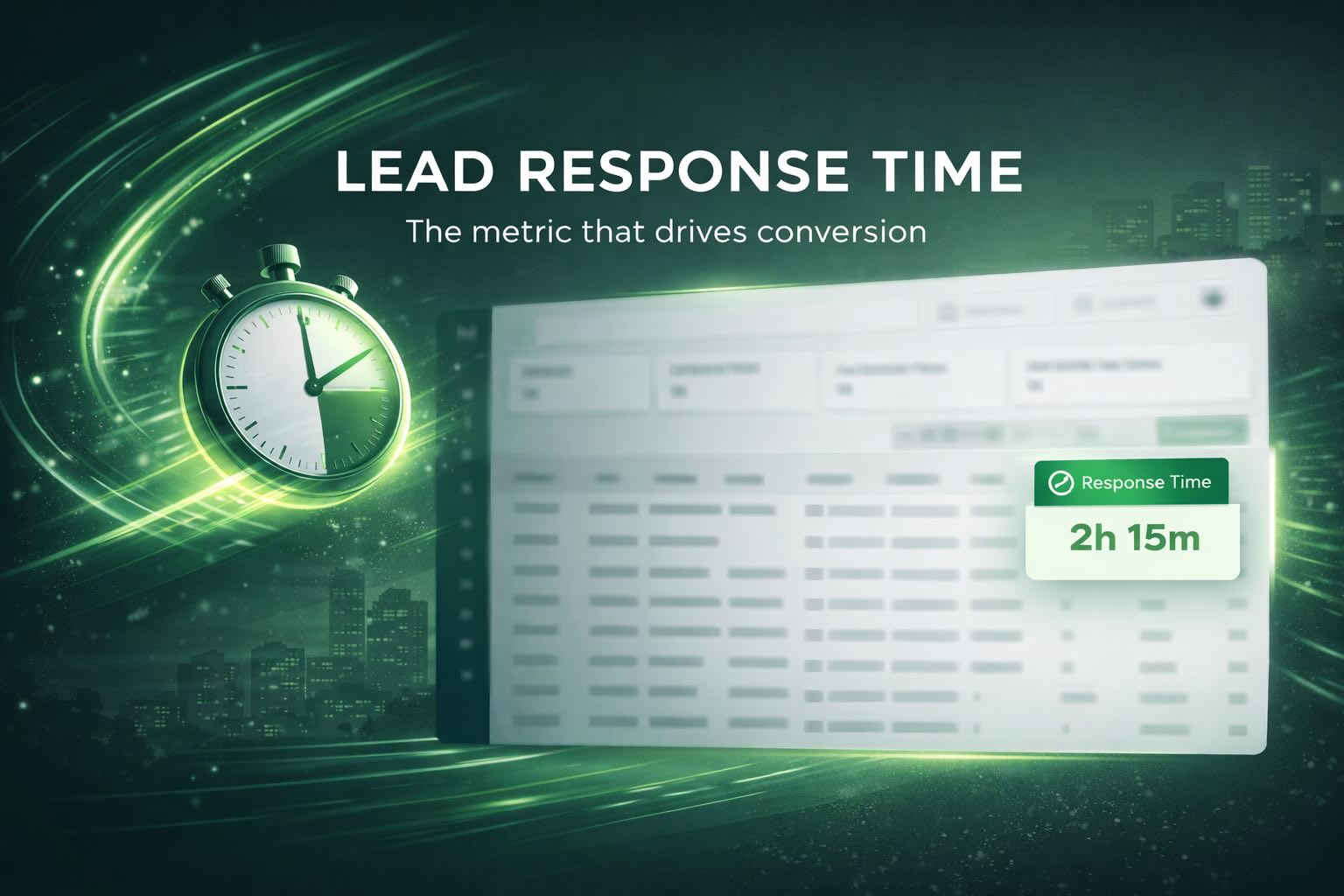
Matrix now tracks Lead Response Time automatically.
For every lead in your system, Matrix measures the time between when the lead was created and when your team took action—either completing an activity or moving the lead to the next stage.
This happens automatically. No manual tracking. No spreadsheets. No guesswork.
On the Leads listing page, you’ll see a Response Time column showing exactly how long each lead waited before someone on your team engaged. And at the top of the page, there’s a new stat box showing your Average Response Time across all leads in the selected scope.
Why This Matters for Multi-Property Operators
If you’re running a single property, you probably have a sense of how fast your team moves. But if you’re managing 5, 10, or 20 properties across a portfolio, you don’t have visibility into every lead at every hotel.
Response time gives you that visibility.
You can now see which properties are responding quickly and which ones are letting leads sit. You can identify patterns—maybe leads that come in after 5pm don’t get touched until the next afternoon. Maybe certain team members are faster than others.
This isn’t about micromanagement. It’s about understanding where the gaps are so you can fix them.
The Connection to Revenue
There’s a direct line between response time and conversion rate. Leads that get a response within an hour convert at significantly higher rates than leads that wait a day. This isn’t unique to hotels—it’s been documented across industries.
But in hospitality, it’s especially important because so much business is now last-minute. When a corporate travel manager needs 15 rooms next week, they’re not going to wait around for your proposal. They’ll go with whoever gets back to them first.
Response time isn’t just a customer service metric. It’s a revenue metric.
What You Can Do With This Data
Once you have response time visibility, you can start making changes:
Set benchmarks. What’s an acceptable response time for your organization? Four hours? Same business day? Define it, communicate it, and track against it.
Identify bottlenecks. Are leads sitting because your team is overwhelmed? Because lead routing isn’t working? Because certain lead sources don’t trigger notifications? The data will tell you.
Coach your team. Response time is concrete and measurable. It’s easier to coach someone on “your average response time is 18 hours, let’s get that under 4” than vague feedback about being more responsive.
Compare across properties. For portfolio operators, you can now see which properties are setting the standard and which ones need attention.
The Bigger Picture
Lead response time is one metric. But it’s part of a larger shift in how hotel sales teams need to operate.
The properties winning today are the ones that treat speed as a competitive advantage. They’re not waiting for the perfect proposal—they’re getting back to the planner fast, even if it’s just to acknowledge the inquiry and set expectations.
Matrix was built for this reality. Unlimited users so your entire team has access. Real-time pipeline visibility so you can see what’s happening now. And now, response time tracking so you know exactly how fast you’re moving.
Because when the booking window is 30 days, every hour counts.