
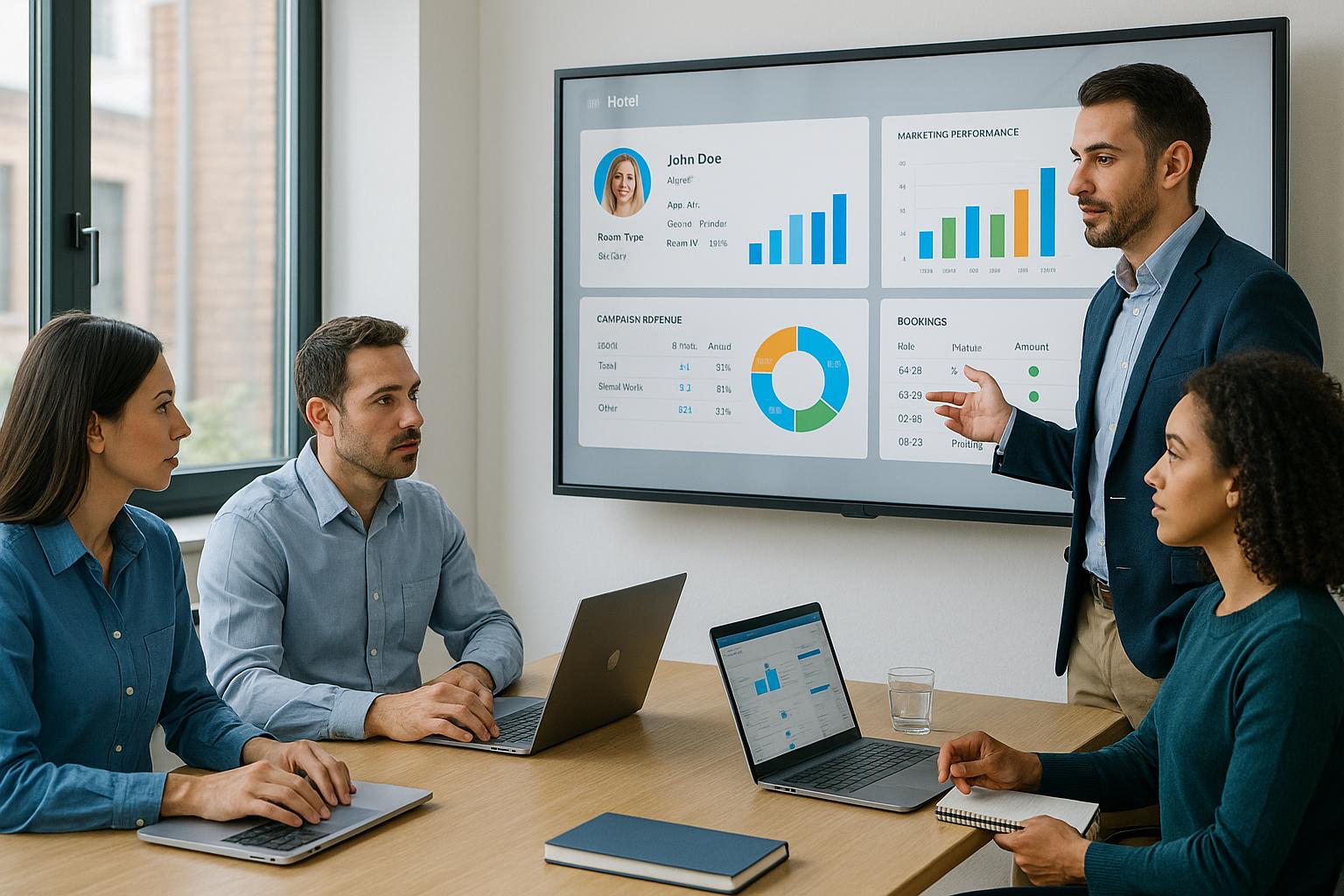

CRM-marketing integration is changing how hotels interact with guests, making communication more personal and effective. By combining CRM systems with marketing tools, hotels can automate processes, analyze guest data, and deliver tailored experiences that boost bookings and loyalty.
Key Insights:
- Automated Lead Management: Capture guest inquiries instantly and follow up without manual effort.
- Personalized Communication: Use guest data to send tailored messages that match preferences and behaviors.
- Targeted Campaigns: Segment audiences by demographics, behavior, or location for focused marketing.
- Upselling Opportunities: Offer upgrades and add-ons based on guest preferences and booking patterns.
- Multi-Channel Marketing: Manage campaigns across email, SMS, and social media with consistent messaging.
- Real-Time Data Sync: Ensure guest profiles update instantly across systems for accurate personalization.
- Feedback Automation: Collect guest surveys at the right time to improve services and satisfaction.
- Lead Scoring: Prioritize high-value leads and allocate sales efforts effectively.
- Loyalty Programs: Automate rewards and promotions to retain guests and encourage direct bookings.
- Performance Tracking: Use analytics to measure campaign success and make data-driven decisions.
Why It Matters:
- 76% of companies already use marketing automation tools.
- 87% of customers expect personalized communication.
- Hotels using segmentation have seen 63% increases in upsell revenue.
These integrations simplify operations, improve guest satisfaction, and drive revenue growth. Whether it’s automating follow-ups, sending targeted offers, or tracking campaign performance, CRM-marketing integration is a must for modern hotels.
Demystifying The Hotel CRM Landscape
1. Automated Lead Capture and Follow-Up
Gone are the days when hotels could rely on manual lead tracking. Integrating CRM systems with marketing tools has completely changed the game, turning every guest inquiry into a potential revenue stream.
Here’s how it works: the moment a potential guest interacts with your hotel – whether by filling out a website form, messaging on social media, or calling the front desk – the system automatically captures their details and kicks off the nurturing process. This automation ensures no lead slips through the cracks, a common issue when juggling multiple platforms or relying on manual data entry.
What makes this approach so effective is its ability to pull data from multiple sources. CRM integration gathers customer information from booking engines, website forms, social media, and even phone calls, funneling it directly into the system. From there, marketing tools can launch targeted campaigns, collect additional details, score leads, and identify which ones are ready for direct sales outreach.
Take M1 Intel’s Matrix as an example. Its intuitive Kanban-style interface helps sales teams track leads through every stage, while its Algolia Search feature provides instant access to account and contact details. This combination of tools not only simplifies lead management but also improves follow-up speed and accuracy, which ultimately drives revenue growth.
The impact of marketing automation is hard to ignore. Studies show it can increase qualified leads by 451% while automating 30% of sales tasks. For hotels, this means more bookings and improved occupancy rates. The system can also send personalized follow-up emails based on guest behavior, while tracking every interaction – from the initial inquiry to post-stay feedback – to create a comprehensive guest profile.
Real-time data synchronization ensures that all departments stay on the same page. As leads move from marketing-qualified to sales-qualified, guest profiles update automatically, and follow-up sequences are triggered. For example, the system might send a thank-you email after an inquiry, set reminders for sales staff to follow up, or even offer special promotions to leads that haven’t converted yet. This seamless coordination keeps communication clear and ensures no opportunity is missed.
2. Personalized Guest Communications
Personalizing hotel communications means much more than just addressing guests by their first names. By integrating guest data from various sources – like booking engines, point-of-sale systems, mobile apps, and past stays – CRM systems allow hotels to create messages that align with each guest’s preferences and behaviors.
This detailed guest profile becomes the backbone of targeted communication strategies. By analyzing booking trends, spending habits, and real-time activity during their stay, hotels can refine their messaging to better match guest expectations. This isn’t just about reaching out – it’s about connecting in a way that feels relevant and meaningful.
When done right, personalized communications can drive impressive results. For example, 68% of travelers are willing to pay more for experiences tailored to their preferences, and 73% are more likely to return when their needs are met. Additionally, 91% of consumers are more likely to engage with brands that offer personalized recommendations and offers.
A great example of this in action comes from Bluesun Hotels & Resorts in Croatia. In November 2024, they adopted HubSpot’s CRM to streamline guest personalization by integrating data more effectively. By segmenting guests based on preferences and past bookings, they saw an increase in bookings, boosted guest loyalty, and significant revenue growth – all driven by personalized pre-arrival emails and post-stay surveys.
"By using data wisely, you create an environment where your guests feel valued and understood – a surefire way to encourage them to return." – Adam Ortman, President and Founder of Kinetic319
The process starts with capturing essential guest details – like room preferences, special requests, or important dates – which can then be used to craft tailored pre-arrival emails, enhance in-room amenities, or create personalized post-stay offers.
A standout example of this approach is Matrix, which ensures that guest preferences – whether it’s a spa treatment or a specific dining choice – are instantly accessible across departments. This seamless data sharing allows for personalized service and marketing campaigns, making every guest interaction feel effortless and thoughtful.
It’s also critical to choose communication channels that suit guest preferences. Some guests may prefer email updates, while others might respond better to SMS or even WhatsApp messages during their trip. Aligning with these preferences can lead to a 20% boost in customer satisfaction.
The key to effective personalization lies in acting on behavioral insights. For example, if a guest frequently books weekend getaways but hasn’t visited in a while, a CRM system can trigger a campaign promoting exclusive weekend packages. Similarly, loyalty program data might reveal a guest’s interest in fitness, allowing hotels to highlight new gym equipment or wellness programs in future communications.
Finally, seamless integration between PMS, CRM, and marketing platforms ensures that these communications feel genuine and tailored, not like generic mass messages. From capturing leads to delivering targeted offers, this integration supports every step of the guest journey.
3. Targeted Campaigns and Audience Segmentation
Audience segmentation can transform a hotel’s guest database from a basic contact list into a powerful revenue tool. By grouping guests based on shared traits, behaviors, and preferences, hotels can craft personalized marketing campaigns that align with each segment’s unique needs and interests.
The key to successful segmentation lies in collecting and analyzing robust data. Hotels can gather insights from various sources like property management systems, Wi-Fi logins, guest surveys, loyalty programs, and even direct interactions with staff. This data provides a deeper understanding of patterns such as booking habits, travel preferences, spending behaviors, and preferred communication channels – essential elements for effective segmentation. With this foundation, hotels can create campaigns that resonate with their audience on a personal level.
Personalized messaging not only boosts conversion rates but also ensures marketing budgets are used more effectively.
Hotels can segment their audiences in several ways. Demographic segmentation considers factors like age, gender, and location. Behavioral segmentation focuses on booking history, engagement levels, and life events. Geographic segmentation, on the other hand, tailors offers to local, domestic, or international travelers.
The impact of segmentation is clear. For example, Elite Hotels of Sweden saw a 27.7% increase in room upgrades and service sales, along with a 63% rise in upsell revenue after implementing segmentation strategies in 2023. Similarly, Sofitel Legend the Grand Amsterdam reported that nearly 5% of guests upgraded their rooms, while 12.2% opted for additional service deals.
Pre-arrival communication is another area where segmentation shines. Hotels that customize pre-arrival emails report a 6% increase in deal approvals, with service deals requested 84% more often and room upgrades 72% more frequently when messaging is properly targeted.
For practical application, location-based targeting is highly effective. Local guests often respond to last-minute offers and day-use packages. Domestic travelers are drawn to weekend getaways, while international guests typically prefer longer stays and comprehensive packages that include multiple services.
Understanding booking patterns also enhances campaign strategies. For instance, frequent guests can be rewarded with VIP perks, high-spenders might appreciate exclusive upgrade offers, and first-time visitors can be introduced to the hotel’s standout features through tailored messaging.
Tools like M1 Intel’s Matrix make segmentation easier by offering intuitive features to track guest preferences and behaviors across a hotel’s portfolio. Its Kanban-style interface allows hotels to visualize guest segments clearly, enabling targeted campaigns that encourage direct bookings and help reduce reliance on online travel agencies.
To get the most out of segmentation, hotels should continuously analyze campaign performance. Identifying which segments drive the most revenue and refining strategies accordingly ensures marketing efforts remain effective and uncover new opportunities.
Finally, segmenting based on life events can foster emotional connections with guests. Personalized birthday greetings, anniversary invitations, and loyalty milestone rewards make guests feel valued as individuals rather than just data points. This approach not only strengthens loyalty but also encourages repeat bookings.
4. Automated Upsell and Cross-Sell Offers
Automated upsell and cross-sell systems turn guest data into opportunities to boost revenue by offering personalized upgrades and add-ons at just the right time. These systems dive into booking details, guest preferences, and past behaviors to craft suggestions that feel tailor-made. The magic lies in gathering and analyzing data with precision.
Hotels collect a wealth of information – everything from booking channels and length of stay to guest preferences like room types, temperature settings, and pet-friendly needs. They also track purchase history and engagement patterns. For example, a guest who has booked spa services before is an ideal candidate for a wellness package. Similarly, someone who frequently orders gluten-free meals might appreciate targeted dining offers. Even booking patterns, like how often a guest stays or their lifetime value, help fine-tune the timing and content of these offers.
Personalized campaigns work. Segmented email campaigns, for instance, have shown to increase revenue by a staggering 760%, and 60% of customers now expect messaging tailored to their preferences. This creates a golden opportunity for hotels to provide seamless, personalized experiences through automation.
Take Lore Group’s Pulitzer Amsterdam hotel as an example. In 2025, they used guest data to build a more engaged database, generating €1.1 million in direct revenue with the help of Revinate Marketing.
Automation covers all stages of the guest journey. Pre-arrival emails, post-booking messages, and in-stay mobile notifications can promote upgrades, spa packages, or dining specials – all based on what the guest has shown interest in before. Even details like climate preferences or traveling with pets can trigger offers for enhanced room settings or pet-friendly amenities.
The secret to successful automation? Relevance beats volume. Instead of overwhelming guests with generic offers, smart systems focus on delivering a few highly targeted suggestions. This approach not only keeps guests happy but also drives better conversion rates.
To take it up a notch, tools like M1 Intel’s Matrix centralize guest data, making it easier for sales teams to spot upsell opportunities. Automated workflows ensure no revenue potential slips through the cracks, while real-time performance tracking helps refine strategies on the go.
5. Multi-Channel Campaign Management
Once you’ve established targeted upsell strategies, the next step is managing campaigns across multiple channels to deepen guest engagement. This might sound daunting at first – juggling email, SMS, social media, direct mail, and mobile apps while maintaining a consistent brand voice is no small feat. But with the right tools, like CRM integration, the process becomes far more streamlined. A unified system ensures consistent messaging and maximizes efficiency across all platforms.
Without integration, things can quickly get messy. Teams might send conflicting messages, branding could become inconsistent, and guest data might stay siloed, making it nearly impossible to deliver personalized communication at every touchpoint. Imagine one department promoting a family-friendly package, while another pushes a business travel offer to the same customer – confusion like this can easily erode trust.
This is where CRM and marketing automation come to the rescue. By centralizing guest data and automating workflows, these tools make personalized campaigns seamless. For instance, if a guest books a spa package on your website, that information can instantly update across all marketing channels. This ensures that follow-up emails, SMS confirmations, and even social media ads are aligned – no manual coordination needed.
The time savings alone are impressive. Marketers are reclaiming an average of 25 hours per week thanks to automation. Tasks like segmenting audiences or transferring guest preferences between systems are no longer a drain on resources. Instead, teams can focus on bigger-picture strategies and crafting creative campaigns.
Consider how this plays out in other industries. In March 2023, DigitalOcean transformed its campaign process by integrating clean, unified customer data. What used to require engineers or analysts to export audience lists became a simple, automated task. This change allowed their marketing team to launch campaigns five times faster, empowering non-technical staff to take the lead.
The benefits of multi-channel coordination are clear. Retailers using three or more sales channels generate 143% more revenue than those relying on fewer platforms. For hotels, this translates to meeting guests where they are – whether that’s through email newsletters, Instagram stories, or last-minute SMS offers.
The key to scaling personalization lies in a unified guest profile. A frequent business traveler might receive offers for premium amenities across every channel, while a family guest gets promotions for kid-friendly activities. These tailored experiences make every interaction feel relevant and thoughtful.
To succeed with multi-channel campaigns, it’s essential to maintain a unified brand voice and visual identity. Analytics tools can help pinpoint which platforms drive the most engagement, while content calendars and A/B testing ensure campaigns hit the mark.
For hotels looking to simplify this process, tools like M1 Intel’s Matrix provide a centralized dashboard to manage campaigns across all channels. Real-time data ensures guest preferences are immediately reflected in marketing efforts, bridging the gap between sales and marketing. The result? Every guest interaction feels seamless, personal, and aligned with their preferences.
sbb-itb-a5d89e3
6. Real-Time Data Sync and Guest Profile Updates
Once multi-channel campaign management is in place, the glue that holds everything together is real-time data synchronization. This ensures that whenever information is updated in one system, it instantly flows across all connected platforms. Without this synchronization, hotels often face the challenge of fragmented data systems that hinder efficiency and personalization.
Despite advancements, many hoteliers still grapple with disconnected systems. In fact, nearly 75% of hoteliers report using some form of data analytics to guide their decisions. Take this scenario: a guest updates their preferences through your mobile app. That update should immediately reflect in your front desk system, reservations platform, and marketing tools, enabling tailored experiences that resonate with the guest’s needs.
Real-time data sync fundamentally changes how hotels respond to guest behavior. For instance, Wyndham leverages this technology to act on guest data quickly. If a traveler who usually books through an online travel agency visits Wyndham’s website, the system delivers timely, personalized offers – like midweek discounts or exclusive upgrades – to encourage direct bookings.
"Guests don’t want to feel like data points. They want to feel understood, which means being met with offers, information and service options that align with who they are and what they need right now."
– Sara Skov, Product Marketing Leader, Amperity
To deliver this level of personalization, syncing key data – such as loyalty status, past bookings, preferences, special requests, and payment details – is critical. When updates happen instantly across systems, every department can work in unison to provide a seamless, customized experience.
A major part of this process is identity resolution. AI-powered tools consolidate data from various touchpoints into a unified guest profile, ensuring that information is always up-to-date and accessible.
The operational advantages are clear. For example, front desk staff can immediately access updated guest preferences, such as dietary restrictions or special requests, allowing them to provide a more tailored experience.
"As technology advances, the ability to interact with data in real time and receive actionable insights will become a standard expectation."
– Jason Q. Freed, Author
For hotels ready to embrace real-time data sync, tools like M1 Intel’s Matrix offer a solution. This platform unifies guest information across all touchpoints, providing instant access to updated profiles through its built-in Algolia Search. By eliminating outdated data, it empowers staff to deliver truly personalized service without delays.
Like other CRM-marketing integrations, the success of real-time synchronization relies on collaboration. Marketing, customer experience, IT, and data teams must work together to ensure seamless integration across platforms and touchpoints. This technical foundation not only boosts personalization but also drives overall operational efficiency.
7. Automated Feedback Collection and Survey Distribution
Automated feedback collection takes guest insights to the next level by capturing their thoughts at just the right time. This method ensures feedback is both relevant and actionable, leading to higher response rates and more accurate insights.
Timing plays a crucial role in the success of surveys. Sending them too soon may result in incomplete feedback, as guests haven’t had time to fully process their stay. On the flip side, waiting too long risks guests forgetting important details. Striking the right balance means choosing a moment when the experience is still fresh but not overly immediate.
Many hotels schedule survey invitations to arrive 2–3 days after checkout, often around 7:00 or 8:00 AM, when guests are more likely to engage. This timing gives guests a chance to settle back into their routine while the details of their stay remain clear. For guests who miss the initial email, a follow-up message sent 5–6 days later can help re-engage them. Personalization is key here – emails with subject lines that include the guest’s first name or the hotel’s name create a sense of connection. Adding phrases like "quick" or "brief", such as "Please take 3 minutes to complete this survey", sets clear expectations and encourages participation.
In addition to post-stay surveys, hotels often gather immediate feedback at checkout. This allows staff to address any urgent issues on the spot, paving the way for quick service recovery. Combining instant feedback with follow-up surveys provides a well-rounded view of the guest experience.
Platforms like M1 Intel’s Matrix simplify this process by automating survey distribution based on specific moments in the guest’s journey. The platform also centralizes feedback alongside other guest data, making it easy for staff to access a guest’s history and tailor future services accordingly.
This seamless feedback system becomes a cornerstone of a hotel’s improvement strategy. By continuously refining the guest experience and integrating feedback into CRM-driven marketing efforts, hotels can boost satisfaction scores, deepen guest loyalty, and create more meaningful connections with their audience.
8. Lead Scoring and Sales Priority Management
Lead scoring is transforming how hotel sales teams decide where to focus their energy. By assigning numerical values to leads based on their likelihood to convert and their potential value, hotels can channel their efforts toward the opportunities that matter most.
This scoring system pulls together key data points like booking frequency, average spend per stay, engagement with marketing emails, website activity, and loyalty program status. The result? A detailed lead profile that helps sales teams prioritize effectively. For instance, a corporate client who frequently books executive suites and regularly interacts with promotional emails will score higher than a first-time website visitor who hasn’t yet engaged with any marketing materials.
How effective is this approach? It can increase conversion rates by up to 30% while slashing guest inquiry response times by half.
The system also benefits from real-time data synchronization. When connected to property management systems (PMS), point-of-sale (POS) systems, and marketing automation tools, lead scores are continuously updated. Whether it’s booking a spa package or responding to an upsell offer, every guest interaction is factored into the score. This ensures sales teams always have the most up-to-date and relevant information at their fingertips.
To make prioritization even clearer, many systems use visual pipeline management tools, like Kanban-style interfaces. These allow teams to quickly spot and track high-priority leads. For example, a tailored Kanban view can highlight top leads needing immediate attention. Sales managers can filter leads by score and assign their best team members to follow up with high-value prospects without delay.
Lead scoring doesn’t just stop at prioritization – it often triggers automated actions. High-scoring guests might receive personalized follow-ups, such as invitations to exclusive spa packages or golf tournaments, helping to drive both engagement and revenue.
Taking things a step further, M1 Intel’s Matrix adds another layer of efficiency. Its integration with instant Algolia Search allows real-time prioritization of accounts and contacts, improving speed, accuracy, and visibility throughout the sales process.
With over 50% of hospitality businesses already using AI in their marketing and sales operations – including lead scoring – this intelligent approach to lead management aligns perfectly with broader CRM-marketing integrations. Together, these tools are helping hotels deliver more personalized guest experiences and drive revenue growth.
9. Loyalty Program Automation and Promotion
Loyalty program automation has become a game-changer for hotels aiming to boost guest engagement and drive revenue. By automating tasks like member sign-ups, point tracking, and reward distribution, hotels can streamline operations and ensure that every guest interaction is rewarded efficiently. When integrated with CRM and marketing tools, these programs run smoothly in the background, capturing valuable data and creating a seamless experience for both guests and hotel staff.
The financial benefits are hard to ignore. Studies show that acquiring a new customer costs five times more than retaining an existing one, making loyalty programs a smart investment for growing revenue. Even a modest 5% increase in customer loyalty can lead to profit growth of 25–85%. These figures explain why many hotels are prioritizing automated loyalty systems.
Take Marriott Bonvoy as an example. This program offers a mix of points-based rewards, exclusive member rates, and access to special events. Guests are encouraged to book directly and use their points for stays, dining, or travel perks. This strategy not only builds loyalty but also generates significant revenue across Marriott’s portfolio.
Automation enhances the guest experience by ensuring real-time point tracking and reward updates. For instance, when a guest checks out, their points are automatically calculated and added to their account. If they qualify for a higher membership tier, the system updates their status and sends personalized messages about new benefits. This keeps guests engaged and motivated to continue their relationship with the brand.
By integrating loyalty systems with property management systems (PMS) and CRM platforms, hotels can maintain centralized guest profiles that update instantly. This real-time data allows hotels to make informed decisions about rewards and promotions, ensuring that offers are both relevant and timely.
Personalization is a cornerstone of successful loyalty programs. With integrated analytics, hotels can study guest behavior and preferences to craft tailored rewards and recommendations. For example, a frequent business traveler might receive an offer for express check-in, while a leisure guest could be tempted with a spa package promotion.
Tiered membership structures also thrive with automation. As guests accumulate activity, the system can automatically promote them to higher tiers, offering new perks and sending congratulatory messages. This progression helps turn occasional visitors into loyal brand advocates.
Promoting loyalty programs across multiple channels becomes effortless with automation. Whether during booking, at the front desk, through email, or on social media, consistent messaging ensures guests are always aware of the program’s benefits.
Modern systems also expand the scope of loyalty rewards. Beyond traditional stays, hotels can now reward actions like referrals, online reviews, social media engagement, and direct bookings. These behaviors are tracked and rewarded automatically, creating a win-win for both guests and the hotel.
Hotels using M1 Intel’s Matrix system take this a step further. Loyalty data integrates seamlessly with sales tools, allowing teams to access guest loyalty status instantly via Algolia Search. This enables personalized interactions based on program tier, ensuring consistent communication of benefits across all touchpoints.
The result? A loyalty ecosystem that’s efficient, personalized, and impactful. Guests enjoy a seamless experience with easy reward earning and redemption, while hotels see more direct bookings, higher guest spending, and stronger long-term relationships.
10. Performance Analytics and Campaign Reporting
Performance analytics is the final piece of the puzzle when it comes to understanding and improving the guest experience. By turning raw data into actionable insights, it helps hotels measure success and make smarter decisions to boost revenue. When CRM systems and marketing automation tools are integrated, hotels can track every guest interaction across multiple touchpoints. This unified reporting provides a detailed view of how effective marketing efforts are and reveals patterns in guest behavior. These insights become the foundation for refining engagement strategies and improving conversion rates.
Metrics like email open rates and click-through rates shed light on how guests interact with campaigns. For instance, one resort discovered that personalized email campaigns significantly outperformed generic ones, proving that tailored communication resonates more effectively with guests. Similarly, monitoring website bounce rates can highlight areas where landing pages might need a refresh to keep visitors engaged longer.
Conversion tracking takes things a step further by linking marketing efforts directly to revenue. Metrics such as the lead-to-booking ratio and cost per acquisition provide a clear picture of campaign performance. One hotel, for example, adjusted its Facebook ads to focus on last-minute vacation deals. The result? Lower acquisition costs and a noticeable spike in direct reservations.
Revenue attribution is another game-changer. It identifies which marketing channels deliver the most profitable bookings, helping hotels allocate their budgets more effectively. With integrated systems in place, tracking these channels becomes seamless, enabling better investment decisions.
A/B testing further underscores the importance of personalization. In one case, a resort compared the performance of a generic campaign to a personalized one and found that the tailored approach drove significantly higher response rates.
Analyzing guest behavior – such as repeat bookings, lifetime value, and Net Promoter Scores – provides deeper insights into guest satisfaction and loyalty. This data helps fine-tune marketing strategies to foster long-term relationships with guests.
Real-time dashboards add another layer of efficiency by offering immediate updates on campaign performance. This allows hotels to make quick adjustments based on the latest data, ensuring that strategies stay relevant and effective.
Take M1 Intel’s Matrix, for example. This system integrates sales and marketing data into a single platform, offering unified reporting tools. It tracks how campaigns directly impact bookings, providing a comprehensive view of how marketing efforts translate into real revenue. Built-in analytics also monitor the progression of opportunities, giving hotels a clear understanding of their return on investment.
Automated reports keep stakeholders in the loop by regularly delivering key metrics like engagement, conversion rates, and revenue attribution. These insights empower teams to make informed decisions that enhance guest engagement, improve ROI, and optimize marketing budgets.
Conclusion
Integrating CRM systems with marketing tools turns disconnected guest interactions into seamless, tailored experiences that enhance both satisfaction and revenue. The ten use cases we explored show this is about more than just technology – it’s about fostering genuine connections with guests at every stage of their journey.
This approach has a tangible impact on guest satisfaction. McKinsey research highlights that personalized and consistent guest experiences can improve satisfaction by up to 20%. Additionally, 68% of travelers are willing to spend more for customized experiences, and 73% are ready to pay up to 30% extra for upgrades after booking.
From a revenue perspective, integrated CRM and marketing systems are game-changers. They enable targeted campaigns, automated upselling, and smarter, data-informed decisions. By tracking revenue across multiple channels, hotels can allocate marketing budgets more effectively, ensuring a higher return on investment.
One of the biggest challenges in hospitality is guest retention – only 37% of guests typically return to the same hotel. But when experiences align with their preferences, 73% of guests are likely to rebook. This makes CRM-marketing integration not just a smart choice but a strategic necessity.
Automation also plays a crucial role. Tasks like lead follow-ups and survey distribution can be handled automatically, freeing staff to focus on delivering top-notch, personalized service. This proactive approach to guest management creates a competitive edge that’s hard to match.
A real-world example of this success comes from Bluesun Hotels & Resorts in Croatia. By leveraging integrated CRM systems for guest segmentation and personalized email campaigns, they increased bookings, streamlined operations, and boosted revenue.
"A hotel CRM is more than just tech – it’s a strategic ally turning every guest interaction remarkable".
FAQs
How does integrating CRM and marketing tools help hotels deliver a more personalized guest experience?
Integrating CRM systems with marketing tools gives hotels the ability to deliver a personalized guest experience by unifying crucial data like booking history, guest preferences, and previous interactions. This centralized approach empowers hotel teams to craft tailored communications – think special promotions, custom offers, or even personalized greetings that make guests feel valued.
With this setup, hotels can go beyond generic messaging. They can send targeted communications that align with each guest’s unique profile, offer pre-arrival upgrades or exclusive services, and stay connected with guests long after their visit. The outcome? A smoother, more memorable experience that builds loyalty and keeps guests coming back.
How can automated upselling and cross-selling improve hotel marketing strategies?
Automated upselling and cross-selling are game-changers for hotel marketing, helping boost revenue while elevating the guest experience. These strategies encourage guests to consider room upgrades, premium services, or complementary add-ons – all tailored to their specific preferences.
By offering personalized recommendations, hotels can craft experiences that leave a lasting impression and build guest loyalty. Automation also simplifies the process, allowing staff to focus on other tasks while ensuring guests receive timely and relevant offers. This not only drives profitability but also nurtures stronger guest relationships through thoughtful, value-driven interactions.
How can hotels use real-time data to enhance guest experiences and streamline operations?
Hotels can use real-time data synchronization to elevate guest experiences and fine-tune their operations. By connecting data across all departments, they can quickly adapt to guest preferences, offering personalized perks like customized promotions or addressing potential problems before they escalate.
On the operational side, real-time data helps simplify tasks such as housekeeping, maintenance, and internal communication. This leads to more efficient workflows, smarter resource use, and quicker service. The result? Hotels can stay one step ahead of guest expectations, ensuring unforgettable stays while keeping daily operations running smoothly.